Month-by-Month: What Actually Happens
January and February: Calving Season
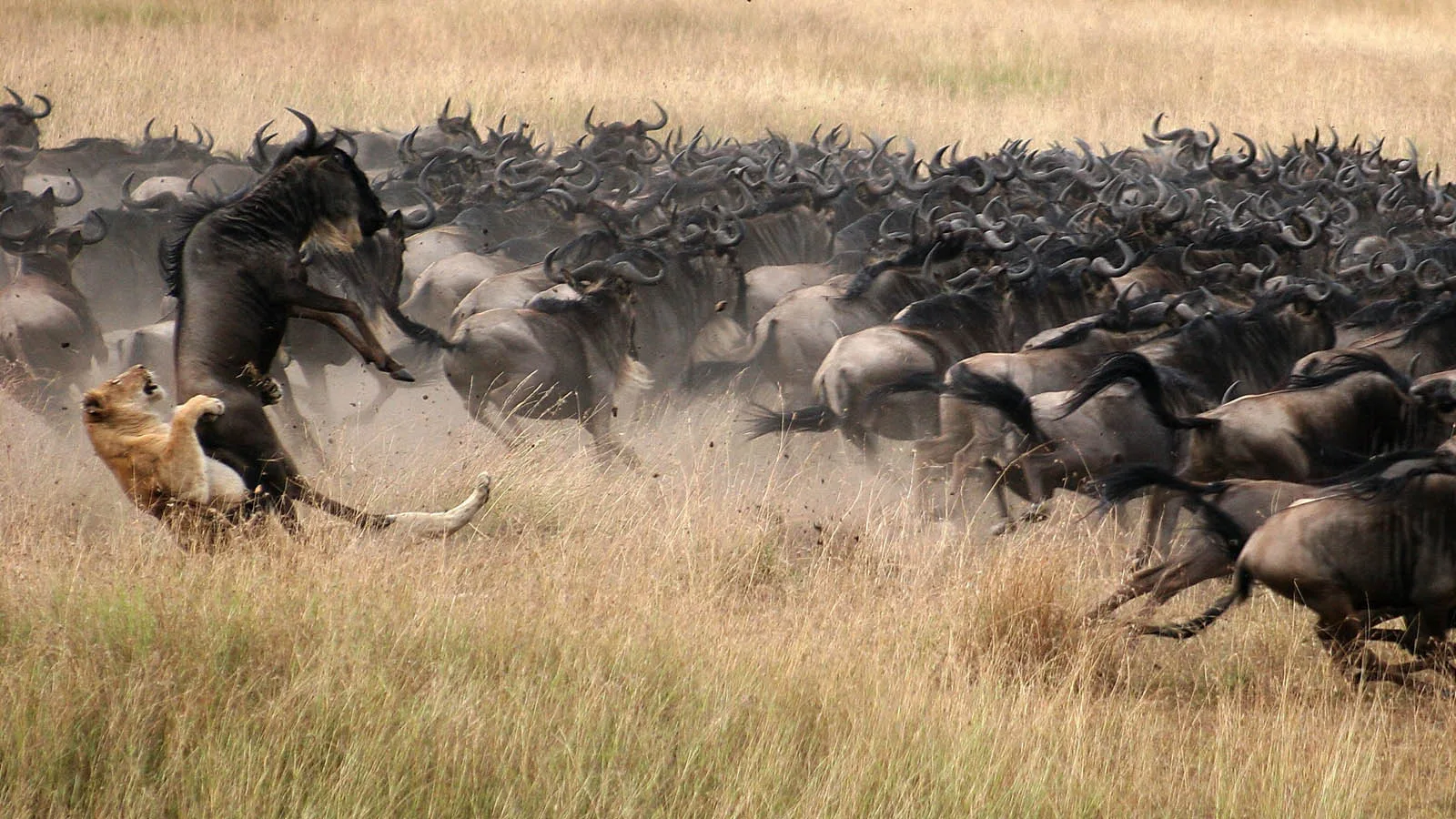
This is Tanzania's best-kept secret and, for many experienced safari-goers, the finest time of year. Hundreds of thousands of wildebeest calves are born on the short-grass plains of the southern Serengeti and Ndutu region. The concentration of vulnerable newborns draws predators in extraordinary numbers—lions, cheetahs, and hyenas are never far away. The landscape is green and alive, and because most travelers assume July is the only time to go, the crowds are manageable.
Best for: Predator action, photography, newborn animals, and avoiding peak-season prices.

March, April, and May: The Long Rains
This is the quietest and most affordable window. The long rains arrive in March and continue through May. Some camps in the southern and western parks close entirely, and roads can become difficult. However, the landscapes are at their most photogenic—dramatic skies, vivid greens, and few vehicles. By May, the rains are easing, and the migration begins its northward movement through the western corridor. Budget-conscious travelers who don't mind occasional downpours can find exceptional value.
Best for: Budget travel, photography (dramatic skies), solitude, and birding.
June: The Transition
June marks the start of the dry season. The long rains have ended, the roads are drying out, and wildlife begins to concentrate. Migration moves through the western Serengeti, and the Grumeti River crossings can offer early drama with fewer vehicles than the Mara River later in the year. Temperatures are pleasant, and the crowds haven't yet arrived. It is one of the best-value months of the year.
Best for: Value, early migration action, and pleasant weather.
July, August, and September: Peak Season
This is the classic Tanzania safari experience. Dry conditions make wildlife easy to find, and the migration reaches the northern Serengeti, where herds face the crocodile-filled Mara River. River crossings are the main draw, but they are unpredictable and cannot be guaranteed. Be prepared for crowds at major sightings—you may share a lion pride with thirty other vehicles. Lodges book up to a year in advance, and prices are at their highest.
Many travelers pair the northern Serengeti with the Ngorongoro Crater on the same trip, which adds a dramatic change of landscape and a strong chance of seeing rhinos.
Best for: The Great Migration, first-time safari-goers, and classic wildlife viewing.
October: The Underrated Peak
October is often overlooked, but it offers an excellent balance. The migration is still in the north, but the massive herds are beginning to move south. The short rains typically don't arrive until late in the month. Crowds are noticeably thinner than in August, and prices begin to drop. Wildlife viewing remains excellent, with animals concentrated around water sources.
Best for: Migration without the peak crowds and better value than July–September.
November and December: The Short Rains
The short rains bring brief afternoon showers and turn the landscape green again. The migration begins its return to the southern Serengeti. Crowds are low, and prices are attractive. December sees a spike around the Christmas and New Year holidays, so book early if you plan to travel then. This is also an excellent time to combine a safari with Zanzibar, as the coast is warm and the rains are usually short-lived.
Best for: Green season value, Zanzibar combinations, and quieter parks.