Zaita Tours
Tanzania Fly-In Safari

The Safari That Skips the Road

Light aircraft, remote airstrips, and more time in the parks—not on the highway.

Plan a Fly-In Safari

What a Fly-In Safari Actually Is

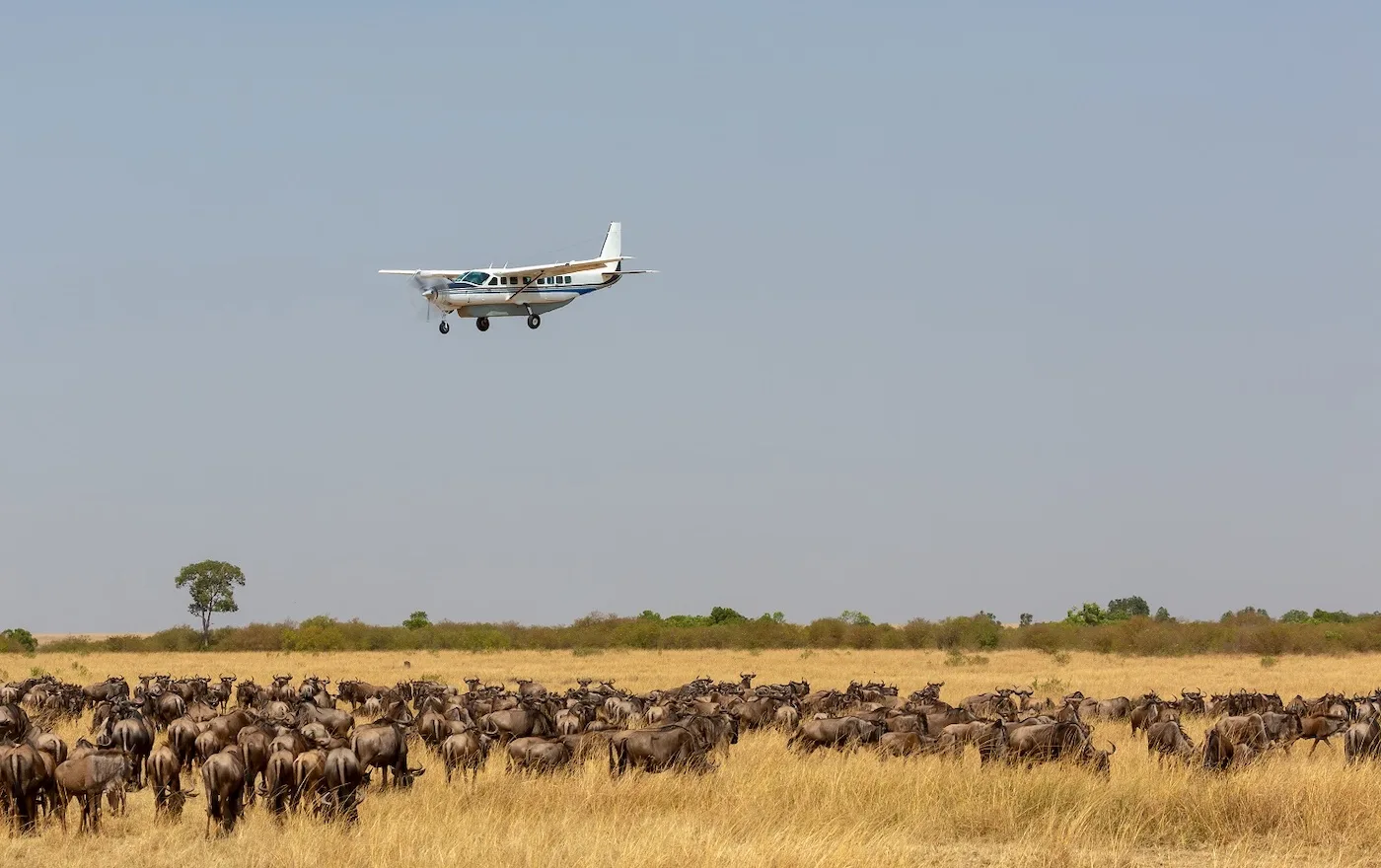
A fly-in safari replaces long road transfers with short flights in small aircraft. You land on a dirt airstrip inside or near the park, where your guide meets you with a vehicle. From there, the safari proceeds exactly like any other—game drives, meals, and nights in camp.

The difference is what you do not experience: the five- to twelve-hour drives between parks. On a fly-in itinerary, that time becomes game drive time, rest time, or simply more time in the places you traveled to see.
Fly-In vs Drive-In: The Honest Comparison

This is the decision most travelers face, and it is not simply “fast but expensive” versus “slow but cheap.” The two approaches produce genuinely different trips.

  • Time on long transfers. Fly-in legs take 35 to 120 minutes. Drive-in legs take five to twelve hours.
  • Cost. Fly-in flights run roughly $250 to $650 per person per leg. Drive-in transfers cost less, because the vehicle cost is shared across your group.
  • Luggage. Fly-in limits you to a 15kg soft bag, strictly enforced. Drive-in has no practical restriction.
  • Schedule. Fly-in flights depart at fixed times unless you book a private charter. Drive-in gives you full control, and you can stop whenever you like.
  • Roadside wildlife and culture. Fly-in skips them entirely. Drive-in includes Maasai villages, viewpoints, and roadside game.
  • Access to remote parks. Fly-in reaches them easily. The southern circuit is fly-in in practical terms. Drive-in is limited by time and road conditions.
  • Weather. Fly-in flights can be delayed during the long rains. Drive-in is rarely affected.
  • The practical rule: drive between parks that are close together. Fly for the long hauls—anything involving the southern circuit, Zanzibar, or the far western parks.


Where Fly-In Safaris Make the Most Sense

The Southern Circuit

This is the strongest case for flying. Nyerere and Ruaha are remote, and the roads are long and rough. A flight from Dar es Salaam to Nyerere takes 45 minutes; the drive costs you a full day. Ruaha is 90 minutes by air from Dar, or ten to twelve hours by road. In practical terms, the southern circuit is a fly-in destination. Nobody drives it for pleasure.

Zanzibar Connections

If your trip includes Zanzibar, flying changes the logistics entirely. Nyerere is a 60-minute flight from Zanzibar, so you can do three nights in the park and fly straight to the beach without doubling back through Dar es Salaam or Arusha. This saves a full travel day and often reduces total flight costs.

Short Trips

If you have five or six days, driving limits you to one region at most. Flying lets you combine two parks—say Serengeti and Ngorongoro—without losing a day to transit.

What to Expect on the Aircraft

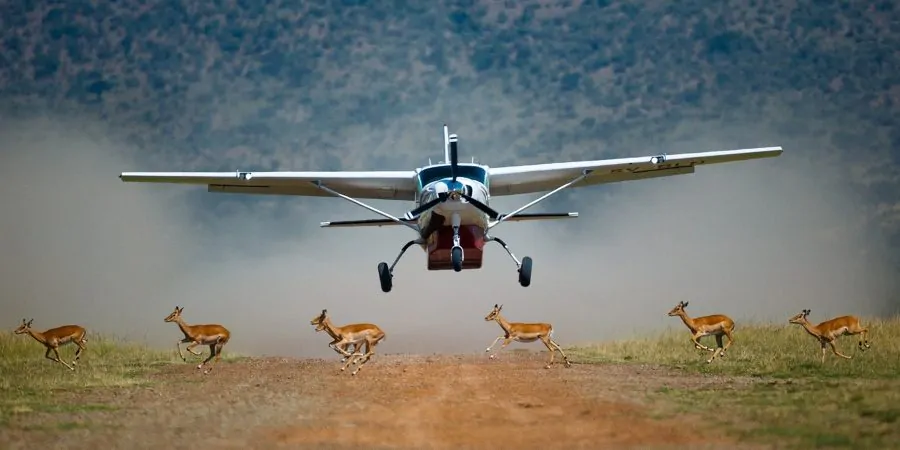
Tanzania’s safari flights are not conventional airline travel. They operate on a patchwork of scheduled routes and private charters using small aircraft—typically Cessna Caravans or similar, carrying nine to fifteen passengers.

Luggage is the first adjustment. The standard limit is 15kg per person in a soft-sided bag. Hard-shell suitcases physically do not fit in the cargo holds. If you are traveling with camera gear or excess luggage, plan to store it at your starting point or arrange a private charter, which has no weight restriction.

Schedules are fixed unless you book a private charter. Scheduled flights run on set routes and departure times, and your itinerary needs to align with them.

The flight itself is part of the experience. The aerial views of the Serengeti’s river systems, the Rift Valley, and the southern woodlands are genuinely extraordinary, and the aircraft’s large windows are designed for exactly that.

Popular Fly-In Routes

Arusha to Serengeti (Seronera): 45 minutes. Best for the northern circuit and short trips.

Dar es Salaam to Nyerere: 45 minutes. Best for the southern circuit and Zanzibar connections.

Dar es Salaam to Ruaha: 90 minutes. Best for remote wilderness and elephants.

Zanzibar to Nyerere: 60 minutes. Best for safari-and-beach combinations.

Nyerere to Ruaha: 60 to 90 minutes. Best for a two-park southern itinerary.

What a Fly-In Safari Costs

Internal flights add roughly $250 to $650 per person per leg on top of your land package. A three-leg southern circuit itinerary adds around $900 to $1,800 per person in flight costs alone.

For a 10-day trip for two people, a full fly-in approach costs approximately $1,800 to $2,800 in transfers, compared to $1,400 to $1,800 for full drive-in. The gap is real, but so is the time saved: roughly half a day of travel versus three to four full days on the road.

The honest framing is this: you are not paying for luxury. You are paying for time, access, and comfort on long routes where driving is impractical.

When to Choose Fly-In—and When Not To

Choose fly-in if you have five to six days or fewer, your itinerary includes the southern circuit, Zanzibar, or Ruaha, you are combining a Kilimanjaro climb with a safari, or long rough road journeys are uncomfortable or unappealing.

Stick with driving if you have seven or more days, you are focused on the northern circuit only, you value roadside wildlife and cultural stops, or you are on a tighter budget and can allocate more days.

The hybrid approach is what many experienced travelers actually do: fly into the most distant park, drive between intermediate parks where the road is scenic, and fly out. For a 10-day trip, this often gives the best balance of time, cost, and experience.

Ready to Skip the Road?

Tell us which parks you want to visit and how many days you have. We will tell you honestly whether flying makes sense for your itinerary—and if it does not, we will say so.