In this article 15 sections
- Hadzabe Tribe History
- Who Are the Hadzabe People?
- Where Do the Hadzabe Live in Tanzania?
- How Do the Hadzabe Live as Hunter-Gatherers?
- How do the Hadzabe find food?
- What do the Hadzabe eat?
- Traditional Skills and Knowledge of Nature
- What Language Do the Hadzabe Speak?
- Hadzabe Culture and Daily Life
- Are the Hadzabe still living as hunter-gatherers today?
- How Many Hadzabe People Are Left?
- Can Tourists Visit the Hadzabe in Tanzania?
- What can you expect during a Hadzabe cultural visit?
- Why Include a Hadzabe Visit in Your Tanzania Safari?
- Experience the Hadzabe Culture During Your Tanzania Visit
Hadzabe Tribe History
The Hadzabe are an Indigenous hunter-gatherer people who live around Lake Eyasi in northern Tanzania. Their traditional way of life is closely connected to the land, where hunting, gathering wild foods, and sharing knowledge about nature remain important parts of their cultural identity.
Visiting the Hadzabe offers a different experience from a traditional wildlife safari. Instead of focusing only on animals, you have an opportunity to learn about a community with a deep understanding of the natural environment, traditional hunting techniques, and a way of life passed down through generations.
Whether you are interested in their culture, language, food, or daily activities, learning about the Hadzabe helps you discover another side of Tanzania. For travellers visiting northern Tanzania, a cultural experience near Lake Eyasi can also be combined with a safari to some of the country's most famous national parks.

Who Are the Hadzabe People?
The Hadzabe are an Indigenous community in northern Tanzania, traditionally known for their hunter-gatherer lifestyle. They obtain food from the natural environment by hunting wild animals, gathering honey, and collecting fruits, berries, tubers, and other edible plants.
Unlike communities whose livelihoods depend mainly on farming or livestock, the Hadzabe have traditionally relied heavily on their knowledge of the land and its natural resources.
Their ability to track animals, recognise edible plants and find food in changing seasonal conditions reflects generations of knowledge passed between community members.
The Hadzabe are often described as one of Africa's remaining hunter-gatherer communities. Their cultural traditions and knowledge of the natural environment make them an important part of Tanzania's cultural heritage.
Where Do the Hadzabe Live in Tanzania?
The Hadzabe live around Lake Eyasi in northern Tanzania, between the Ngorongoro Highlands and the wider Serengeti ecosystem.
This area forms part of the Great Rift Valley and contains woodlands, grasslands, and other natural habitats that have supported the Hadzabe's traditional way of life for generations.
Their knowledge of the surrounding environment helps them identify places where food is available throughout the year. As seasons change, the availability of wild fruits, honey, tubers, and game animals changes too.
Lake Eyasi is also an important destination for visitors interested in Tanzania's cultural heritage. A guided visit can provide insight into the Hadzabe's daily activities and their relationship with the land.
You can learn more about the area on our Lake Eyasi destination page.
How Do the Hadzabe Live as Hunter-Gatherers?
The traditional Hadzabe way of life centres on finding food, sharing resources and adapting to the natural environment.
Rather than depending entirely on farming, shops or livestock, Hadzabe communities have traditionally relied on hunting and gathering to meet many of their daily needs.
Their activities vary according to the season, the availability of food and the circumstances of individual families and communities.

How do the Hadzabe find food?
Hunting and gathering require detailed knowledge of the surrounding environment.
Hadzabe hunters learn to recognize animal tracks, identify movement through the bush, and notice small changes in the landscape that may indicate the presence of wildlife.
Gathering is equally important. Wild fruits, berries, tubers, and other edible plants provide food when available, while honey is a valued source of energy.
Traditionally, different members of the community contribute through hunting, gathering, preparing food, and sharing knowledge. These skills are learned through experience and passed down between generations.
This knowledge allows the Hadzabe to make use of resources that can be difficult for people unfamiliar with the environment to identify.

What do the Hadzabe eat?
There is no single “Hadza diet,” because what they eat changes with season, camp, location, and how much they are involved in trade or farming. But traditionally their diet is built from wild game, honey, wild plant foods, and small amounts of insects and other wild items, with traded foods becoming more common today.

Wild game and animal foods.
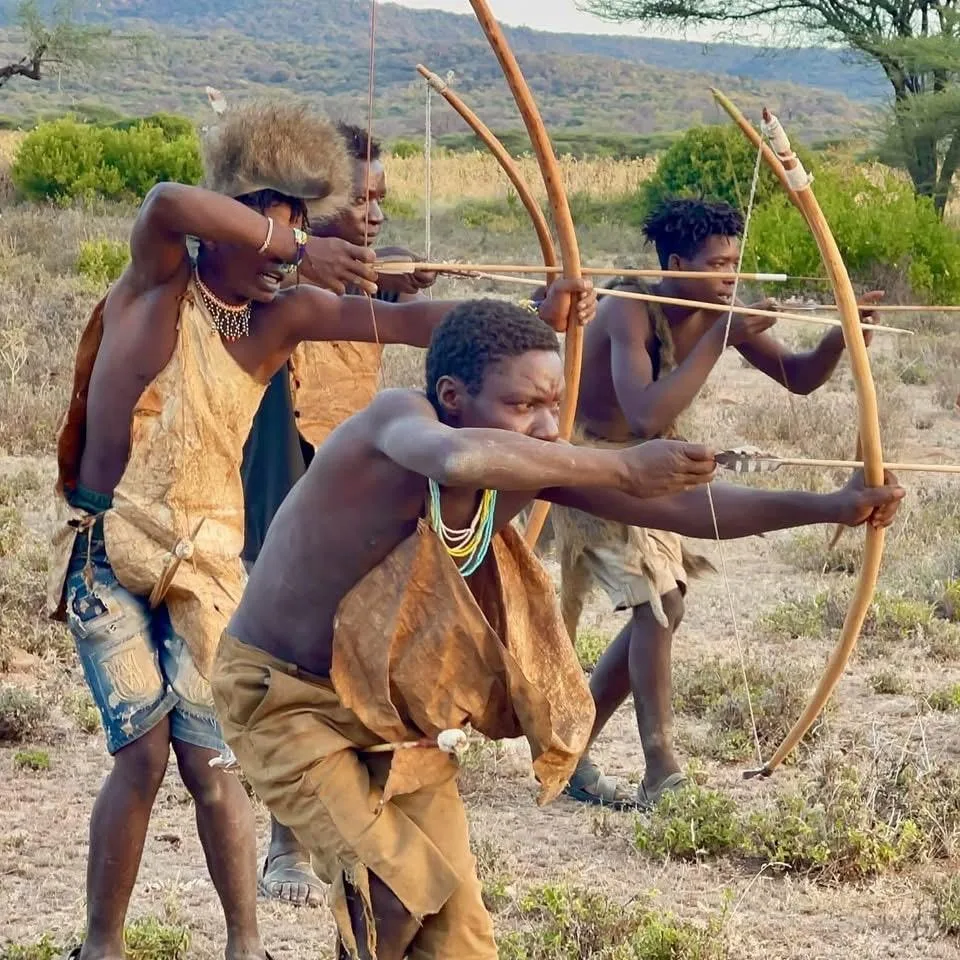
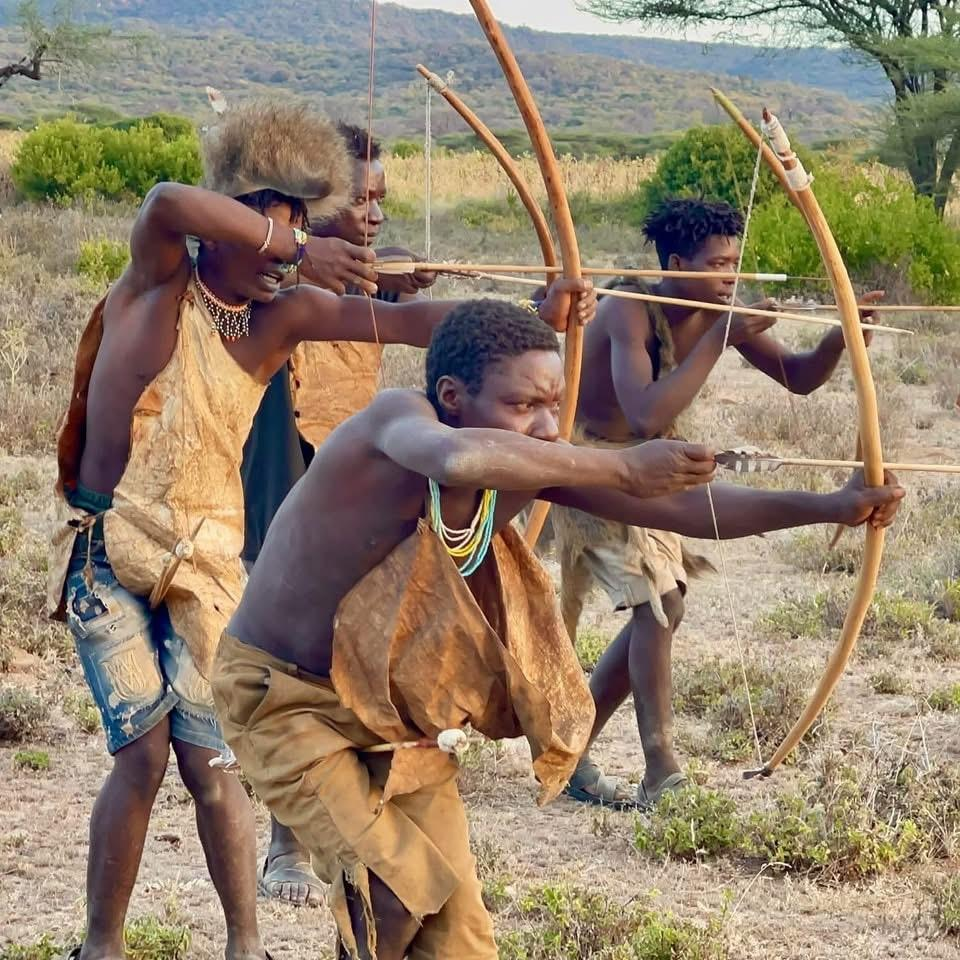
Hadza men hunt with bows and arrows, often small game but also larger animals when possible. Their meat can include antelope such as dik-dik, kudu, and impala, plus warthogs, baboons, hyraxes, birds, reptiles, and sometimes insects and larvae. Meat is usually roasted over a fire and shared widely within the camp. They do not traditionally herd livestock or farm as their main livelihood, though some now keep a few animals or trade for food.
Honey is central.
Honey is one of the most valued foods. Men often climb baobab trees or follow bee nests to harvest wild honey, sometimes using smoke. Honey is eaten fresh, often with honeycomb and bee larvae, and it can be an important seasonal source of energy. It is also traded for other goods.
Wild plant foods are the everyday staple.
Women and children mainly gather wild plants using digging sticks. This includes wild tubers, baobab fruit pulp and seeds, berries, wild figs, tamarind, other wild fruits, nuts, seeds, and edible leaves. Some tubers need roasting or processing before eating. Plant foods are often the most reliable daily food, especially when meat is scarce.
Insects and small wild foods.
Depending on season and place, they may eat insects, larvae, eggs, and other small wild foods. These are not usually the main dish but add variety and protein.
Cooking and sharing.
Food is usually cooked simply over open fires—meat roasted, tubers roasted or sometimes boiled, and fruit eaten raw. Sharing is important socially; a successful hunt is not just one family’s food. They also drink water from springs, pools, and sometimes stored in or near baobabs, though water availability shapes where camps are placed.
Traditional Skills and Knowledge of Nature
Hunting is one of the most widely recognized aspects of traditional Hadzabe life. It involves more than using a bow and arrow. Hunters depend on patience, observation, and a detailed understanding of animal behavior.
Traditional hunting techniques use handmade bows and arrows, including poison-tipped arrows. Hunters learn to identify footprints, follow animal movements, and move quietly through the bush.
These skills develop through experience and the sharing of knowledge between generations. Reading a track or recognizing a small sign in the environment can help a hunter understand which animals have passed through an area.
For visitors, learning about these techniques can provide insight into how people use knowledge of nature to find food and survive in a challenging environment.
A cultural visit should always respect the Hadzabe's choices about what they wish to demonstrate or share.
What Language Do the Hadzabe Speak?
The Hadzabe speak Hadzane, a language known for its distinctive click sounds. These sounds form an important part of the language and make it particularly interesting to people learning about Tanzania's linguistic diversity.
Hadzane is not simply a variation of Swahili. Linguists have studied it because its relationships with other languages are difficult to establish clearly.
The language also carries cultural knowledge, including stories, traditional practices, and knowledge of the natural environment.
Some Hadzabe also speak Swahili, which helps them communicate with people from neighboring communities and with visitors.
Language is an important part of cultural identity, and learning a little about Hadzabe can help visitors appreciate the uniqueness of the Hadzabe's heritage.
Hadzabe Culture and Daily Life
Sharing, cooperation, and a close relationship with nature are important aspects of traditional Hadzabe life.
Families and small groups may move within their traditional lands according to food availability and seasonal conditions. Daily activities can include hunting, gathering, preparing food, looking after children, storytelling, and sharing knowledge.
Traditions are passed between generations through observation, participation, stories, songs, and dance. Children can learn practical skills by watching adults and taking part in everyday activities.
Knowledge of plants, animals, weather patterns, and the landscape is especially valuable in a hunter-gatherer way of life.
However, it is important to understand that the Hadzabe are not a community frozen in time. Their lives differ between individuals and families, and some have varying levels of contact with schools, markets, neighboring communities, and modern services.
Their traditions remain an important part of their identity while their experiences continue to change.
Are the Hadzabe still living as hunter-gatherers today?
Many Hadzabe continue to practice important elements of their traditional hunter-gatherer lifestyle, although not everyone lives in the same way.
Some still depend heavily on hunting and gathering, while others interact more frequently with neighboring communities and modern services. Their circumstances can differ according to location, family, and access to resources.
It is more accurate to understand the Hadzabe as a living community with its own history and changing experiences than to view them as people from the past.
Their knowledge of nature, cultural traditions, and connection to their ancestral lands remain important parts of their heritage.
How Many Hadzabe People Are Left?
The Hadzabe are one of Tanzania's smaller Indigenous communities. Estimates often place their population at around 1,000 to 1,500 people, although numbers vary between sources and can be difficult to establish precisely.
Some groups move within their traditional lands, and not all Hadzabe live in the same way or in the same location.
Many continue to maintain important cultural traditions, while others have different levels of involvement with education, markets, and neighboring communities.
Understanding these differences is important because the Hadzabe are not a single group with identical experiences. Their lives and choices vary, just as they do in other communities.

Can Tourists Visit the Hadzabe in Tanzania?
Yes. Travellers can arrange guided cultural visits with Hadzabe community members around Lake Eyasi in northern Tanzania.
These visits offer an opportunity to learn about traditional skills, daily activities and the community's relationship with its environment. What you experience depends on the people you meet, the season and the activities taking place that day.
A visit may include an early morning walk with hunters, learning how animal tracks are recognised, discovering edible plants or seeing traditional fire-making techniques. Some experiences may also involve learning about honey gathering or hearing stories about life around Lake Eyasi.
The experience is different from visiting a museum or watching a performance arranged for tourists. It can provide a more personal introduction to the Hadzabe's way of life, provided the visit is arranged respectfully and with the community's consent.
What can you expect during a Hadzabe cultural visit?
A visit to the Hadzabe may offer insight into daily activities that are closely connected to the natural environment.
Depending on the arrangements and what community members choose to share, visitors may have the opportunity to:
- Join hunters on an early morning walk.
- Learn how animal tracks and other signs are identified.
- Discover how wild plants are recognised and gathered.
- Learn about traditional fire-making methods.
- Hear about hunting, honey gathering and daily life.
Activities are not guaranteed, and visits can differ from one day to another. The aim is to learn about the community rather than expect people to perform on demand.
Ask before taking photographs, follow your guide's instructions, and respect any requests made by community members. A thoughtful visit helps make the experience more positive for both visitors and hosts.
Why Include a Hadzabe Visit in Your Tanzania Safari?
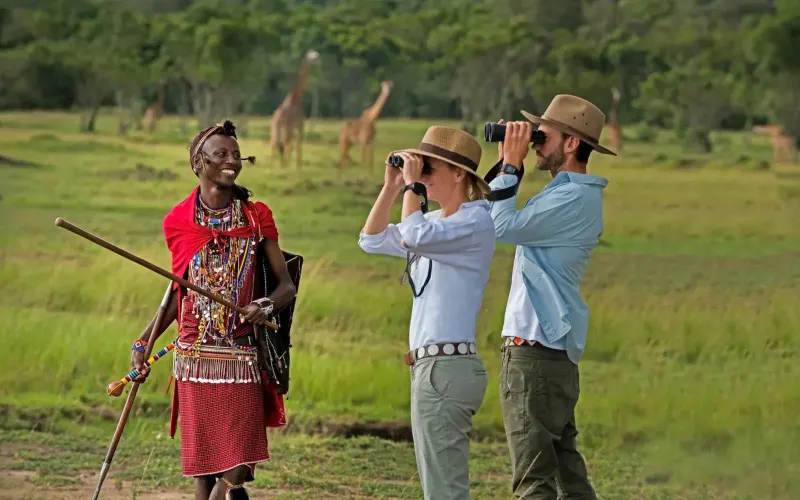
A Tanzania safari is often associated with lions, elephants, giraffes, and the Great Wildebeest Migration. A visit to the Hadzabe adds a cultural dimension to the journey.
It gives you a chance to learn about the people who live in the region, the skills they have developed, and the different ways communities relate to the natural world.
Many travellers choose to include Lake Eyasi in a wider Tanzania safari. Depending on the length of the trip and the route, you can combine a cultural visit with destinations such as Serengeti National Park, Ngorongoro Crater, Tarangire National Park and Lake Manyara National Park.
The exact itinerary depends on your available time, interests and starting point. Adding Lake Eyasi can help you experience a different side of northern Tanzania beyond wildlife viewing alone.
Explore why travellers visit the Hadzabe during a Tanzania safari
Experience the Hadzabe Culture During Your Tanzania Visit
The Hadzabe offer a chance to discover a different side of Tanzania, shaped by knowledge of the natural environment, traditional skills, community life, and cultural heritage.
From learning about hunting and gathering to understanding Hadzane and exploring the Lake Eyasi region, a guided cultural visit can add depth to your journey.
If you are planning a northern Tanzania safari, consider allowing time for Lake Eyasi alongside the wildlife destinations you want to explore. The experience can help you appreciate not only Tanzania's landscapes and animals, but also the people and cultures that make the country unique.
Explore our Tanzania safari packages and discover how a Lake Eyasi cultural visit could fit into your trip.